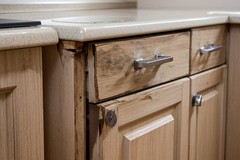
A burst supply line, an overflowing dishwasher, or a slow leak behind the sink can turn a functional kitchen into a soggy mess in a matter of hours. Cabinets are often the first casualty because they sit right where plumbing runs and water pools. When homeowners call us about water damage to kitchen cabinets, the first question is almost always the same: what can actually be saved, and what has to be torn out? The honest answer depends on how long the water sat, what the cabinets are made of, and how quickly the drying process begins. If you are facing this situation and want professional help, our damage restoration services in Milwaukee can assess the damage and guide you toward the most cost-effective path forward.
The good news is that not every wet cabinet is a lost cause. Quick, informed action makes the difference between salvaging your existing kitchen and replacing it entirely. Below, we walk through how water affects cabinets, which materials hold up, and the steps that give you the best chance of saving what you have.
How Water Attacks Kitchen Cabinets
Cabinets are built to look solid, but most are more vulnerable than they appear. Many standard cabinet boxes are made from particleboard or medium-density fiberboard (MDF), both of which are essentially compressed wood fibers held together with glue. When these materials absorb water, they swell, lose structural strength, and often never return to their original shape even after drying. Solid wood and plywood construction fare much better, though they are not immune to warping, staining, or delamination.
The location of the water matters too. Base cabinets under a sink or dishwasher sit directly in the path of leaks and tend to soak up moisture from the bottom up, which is exactly where the weakest particleboard is often hidden. Water can wick upward through the material and travel into areas you cannot see, which is why surface appearances can be deceiving. A cabinet that looks dry on the outside may be holding moisture in its base, kick plate, or back panel, setting the stage for mold and ongoing deterioration.
What Can Usually Be Saved
Solid wood doors, drawer fronts, and face frames are the most likely components to survive water damage to kitchen cabinets, especially if they are dried promptly. Wood can tolerate short-term exposure, and with careful drying, refinishing, and resealing, many of these pieces look as good as new. Hardwood plywood boxes also have a reasonable shot at recovery because the cross-laminated layers resist swelling better than pressed-fiber materials.
Hardware such as hinges, drawer slides, and handles can almost always be cleaned, dried, and reused, which helps keep costs down. If the damage was caught quickly and involved clean water from a supply line rather than contaminated water, your odds of saving more improve significantly. The faster the moisture is extracted and professional-grade drying equipment is brought in, the more material you keep. This is where the type of water involved becomes critical, since gray or black water introduces contamination that changes the entire approach.
What Usually Has to Go
Particleboard and MDF cabinet boxes that have swollen, crumbled, or lost their shape generally cannot be restored. Once these materials break down, they no longer hold screws or support countertops reliably, and repainting over damaged fiberboard only masks a structural problem. Cabinets exposed to contaminated water, whether from a sewage backup or floodwater, typically need to be removed regardless of material, because porous surfaces can harbor bacteria that cleaning cannot fully eliminate.
Mold is another deciding factor. If moisture has lingered long enough for mold to take hold inside cabinet cavities or behind them, remediation becomes necessary before anything else. In those cases, our mold removal and remediation services in Milwaukee and nearby areas address the underlying problem so you are not simply sealing contamination inside a wall or cabinet box. Trying to salvage mold-affected particleboard almost never pays off, and it can create health concerns for your household.
The Steps That Protect Your Cabinets
When water reaches your kitchen, the clock starts immediately. The actions you take in the first day or two have an outsized effect on how much you can save. Here is a simple sequence that gives your cabinets their best chance:
- Stop the water source and shut off power to the affected area if there is any risk of electrical contact.
- Remove everything from inside the cabinets so air can circulate and contents do not trap moisture.
- Wipe standing water, open doors and drawers, and set up fans to encourage airflow.
- Call a professional for moisture extraction and structural drying before swelling and mold have time to set in.
Household fans and towels help, but they rarely reach the hidden moisture inside cabinet bases and wall cavities. Professional crews use industrial dehumidifiers, air movers, and moisture meters to track drying progress and confirm that materials reach safe levels. Our team provides 24-hour water damage restoration in the Milwaukee region so the drying process can begin before minor damage becomes a full cabinet replacement. Speed genuinely is the deciding variable in most cases.
Preventing a Repeat Problem
Once the immediate crisis is handled, it is worth addressing the conditions that led to the damage. Checking supply lines under the sink, inspecting dishwasher and refrigerator connections, and watching for slow drips are small habits that prevent big headaches. Soft spots at the base of a cabinet, musty odors, or warped toe kicks are early warning signs that moisture is present even when you cannot see standing water.
If cabinets do need to be replaced, the rebuild is an opportunity to upgrade to more water-resistant materials and better-sealed installations. Some homeowners use the moment to redesign the space entirely, and our home renovation services in Milwaukee can combine restoration with improvements so you are not managing two separate projects. Building back smarter reduces the chance of repeating the same loss down the road.
When to Call in the Professionals
It can be tempting to handle a small leak yourself, and minor surface moisture caught instantly may be manageable. But water has a habit of traveling further than it appears, and the cost of underestimating it is high. If water sat overnight, reached multiple cabinets, involved contaminated water, or triggered any musty smell, a professional assessment protects both your property and your health. Restoration specialists can tell you honestly which components are salvageable and document the damage for insurance purposes.
Addressing water damage to kitchen cabinets quickly often means the difference between a manageable repair and a complete kitchen rebuild. Solid wood and plywood can frequently be saved with prompt drying, while swollen particleboard and anything touched by contaminated water usually needs to go. The constant across every case is that fast action wins. If you are dealing with water damage to kitchen cabinets anywhere in Milwaukee, Racine, and the surrounding communities, do not wait for the problem to spread.
RestoreMore is ready to respond quickly, assess what can be saved, and restore your kitchen with as little disruption as possible. For homeowners closer to home, our water damage restoration in Racine is standing by, and you can always reach out for a free assessment to understand your options before making any decisions.