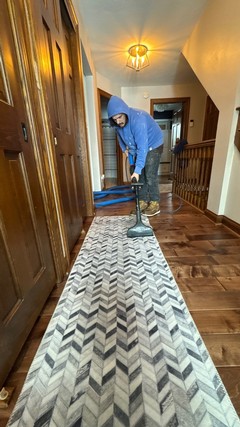
That spilled glass of wine or muddy paw print on your favorite area rug has probably sent you searching for a quick fix. Before you drag out the machine you use on your wall-to-wall carpeting, it is worth pausing to ask the right question first. Can you use a carpet cleaner on a rug? The answer is not a simple yes or no, and getting it wrong can leave you with a shrunken, faded, or permanently damaged piece. As the restoration contractors in Milwaukee and its nearby regions that homeowners trust with everything from spills to serious water damage, we field this question all the time.
The truth is that some rugs handle a carpet cleaning machine beautifully, while others react poorly to the heat, moisture, and agitation those machines produce. Knowing the difference comes down to understanding what your rug is made of and how it was constructed. Let us walk through what you need to check before you flip that switch.
It Depends on the Rug
When people ask can you use a carpet cleaner on a rug, the honest response is that it depends entirely on the type of rug sitting on your floor. A machine-made synthetic rug behaves very differently from a hand-knotted wool piece or a delicate silk heirloom. Carpet cleaning machines rely on hot water, detergent, and suction to lift dirt out of fibers. That process works well on materials designed to withstand it, but it can be disastrous for others.
Synthetic rugs made from polyester, nylon, or polypropylene are generally the most forgiving. These fibers resist moisture, dry relatively quickly, and hold their color well under a standard extraction cleaner. Natural fibers are a different story. Wool can shrink or felt when exposed to too much heat and water, and its natural oils can be stripped away by aggressive detergents. Silk, viscose, jute, and sisal are even more fragile and often require dry cleaning methods rather than the wet extraction a home machine provides.
Check the Label and the Backing
Every rug should have a manufacturer tag, and it is the first place to look before you clean anything. Many labels spell out whether the rug is safe for steam or hot water extraction, whether it should be professionally cleaned only, or whether it can be spot cleaned but not saturated. If the tag says dry clean only, that is your signal to keep the carpet cleaner in the closet.
The backing matters just as much as the face fibers. Some rugs have a latex or adhesive backing that can break down when soaked, causing the rug to crumble, curl, or leave residue on your floor. Rugs with jute foundations can develop brown staining when they stay wet too long, a phenomenon called cellulosic browning. If you cannot find a label or you are unsure about the construction, it is safer to test a small hidden corner or consult a professional before treating the whole piece.
How to Safely Machine Clean a Washable Rug
If you have confirmed your rug is synthetic and the label gives you the green light, a carpet cleaner can do a solid job. The key is controlling moisture and letting the rug dry thoroughly so mold and mildew do not take hold. Here is a straightforward approach that protects both the rug and the floor beneath it.
- Vacuum both sides of the rug first to remove loose dirt that would otherwise turn to mud during cleaning.
- Test your cleaning solution on an inconspicuous corner to check for colorfastness before doing the whole surface.
- Use the minimum amount of water and detergent needed, and make extra passes with the suction to pull out as much moisture as possible.
- Move the rug off the floor or place a barrier underneath so a wet backing does not damage hardwood or transfer dye.
- Dry the rug completely, ideally with good airflow and low humidity, before returning it to its spot.
Rushing the drying step is the most common mistake we see. A rug that feels only slightly damp can still trap enough moisture to grow mold within a day or two, especially during humid Wisconsin summers. If you ever notice a musty smell developing after cleaning, that is a warning sign worth acting on quickly.
When Cleaning Goes Wrong
Even careful homeowners run into trouble, and a rug that stays wet too long can create bigger problems than the stain you were trying to remove. Trapped moisture between a rug and a hardwood or laminate floor can warp the boards and encourage mold growth underneath, where you may not notice it until the damage is significant. This is one of those situations where a small cleaning project can quietly turn into a job for professionals who handle mold remediation in Milwaukee, WI and the surrounding areas.
If your rug was soaked because of a plumbing leak, an overflowing appliance, or a basement backup rather than routine cleaning, the calculation changes entirely. Water from those sources can carry contaminants, and the padding, subfloor, and nearby materials may all need attention. In those cases, professional water damage restoration is the smarter route because it addresses the source and the hidden moisture, not just the visible rug.
When to Call a Professional
Some rugs are simply too valuable, too delicate, or too badly soiled for a home machine to handle safely. Antique and hand-knotted rugs, anything made of wool or silk, and pieces with sentimental or monetary value deserve professional care that matches their construction. Professionals can dust out embedded grit that home vacuums miss, control water temperature and pH precisely, and dry rugs in a controlled environment that prevents shrinkage and browning.
Beyond fine rugs, professional cleaning makes sense for large spaces, heavily trafficked commercial areas, and any rug tied to a moisture problem. Our team offers professional carpet and rug cleaning throughout the region, and we also handle larger restoration needs when cleaning uncovers deeper issues. For homeowners in nearby communities, we provide the same careful service, including carpet cleaning in Kenosha and beyond, so you never have to gamble with a piece you care about.
So the next time you find yourself wondering can you use a carpet cleaner on a rug, start by identifying the material, reading the label, and considering how the rug is built. Synthetic, washable rugs can usually handle a machine when you keep moisture in check and dry them fully. Natural and delicate fibers call for a gentler, professional touch. When you are unsure, or when a stain turns out to be a symptom of a larger water issue, reaching out to a trusted team saves you money and heartache in the long run. Contact RestoreMore for a straightforward assessment, and we will help you protect both your rug and your home.